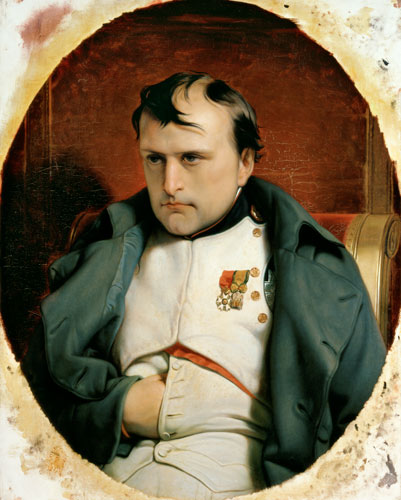
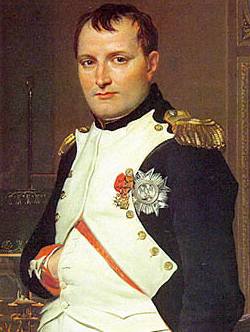
For many who encountered him, Napoleon’s personality escaped the usual boundaries of definition. The writer Germaine de Staël, whose opposition to Napoleon saw her exiled from Paris, thought that unlike most people, he seemed ‘neither good nor violent, neither gentle nor cruel’. ‘Such a being,’ she continued, ‘having no equivalent, could neither feel nor arouse the slightest sympathy.’ For the French author Stendhal, writing to contest Madame de Staël’s ‘slander’, Napoleon was ‘a man endowed with amazing abilities and a dangerous ambition’. He could face adversity ‘with firmness and majesty’ but could also be ‘carried away to the point of frenzy when his passions met with opposition.’ Despite their different motives, each found Napoleon to be a man whose character was difficult to define – and who was perhaps all the more powerful because of it.









 :
:


